
Emoji use in captiions tends to split into two camps — accounts that use them constantly, almost as punctuation, and accounts that avoid them entirely to seem more “professional.” Neither extreme is backed by much evidence. The real answer depends on platform, audience, and how emojis are actually used, not whether they’re used at all.
What Emojis Actually Do in a Caption
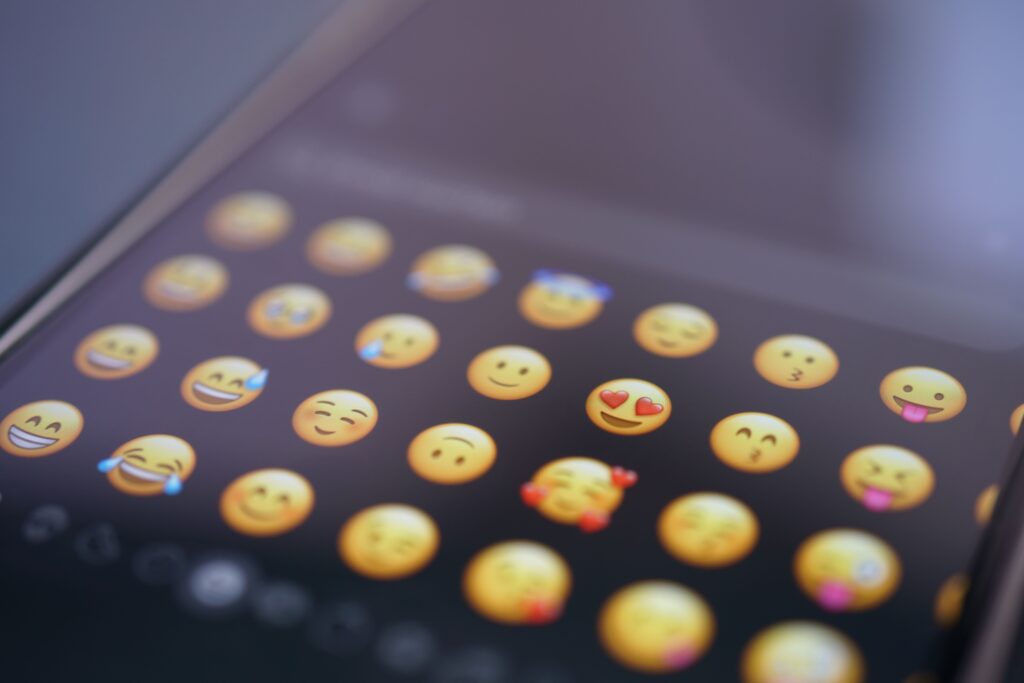
Emojis serve a few real functions: they break up text visually, they can carry tone that’s hard to convey in plain text (sarcasm, warrmth, excitement), and on some platforms they act as a mild attention draw when scanning a feed. They don’t inherently make a caption better or worse — they change how a caption is read, not whether the underlying content is good.
When Emojjis Help
Breaking up longer captions. In a multi-paragraph caption, an emoji at the start of each section can work similarly to a bullet point, making the caption easier to scan without changing its actual content.
Adding tone that text alone can’t carry. A caption ending in “we tried” reads very differently with a 😅 at the end than without one — the emoji signals self-aware humor that might otherwise get missed in plain text.
Visual anchoring for skimmers. On Instagram specifically, a well-placed emoji can draw the eye during a fast scroll, especially at thee very start of a caption where it competes with the “more” cutoff.
When Emojis Hurt
Overuse thhat reads as noise. A caption with an emoji after every three words stops functioning as emphasis and starts reading as clutter — the reader’s eye has nothing to rest on, and the actual words get harder to follow.
Mismatched tone for the audience or platform. A LinkedIn post covered in emojis can undercut credibility for a professional audience, where the norm is closer to zero or one per post. The reverse is also true — a completely emoji-free Instagram caption for a casual lifestyle brand can feel unexpectedly stiff.
Replacing words instead of supporting them. Using emojis as a substitute for actually saying something specific (“This 🔥🔥🔥”) gives the reader nothing concrete, which is the same problem as a generic caption, just with pictures instead of words.
Platformm-by-Platform Differences
Instagram: Light to moderate emoji use is broadly accepted and often expected, especially for lifestyle, food, fashion, and personal brand accounts. One to five relevant emojis per caption is a reasonable range for most niches.
TikTok: Similar to Instagram — casual, moderate use fits the platform’s tone. Captions are usually short enough that even one or two emojis carry noticeable weight.
LinkedIn: Emoji use should be minimal. A single emoji at the start of a post or none at all tends to fit professional norms better than heavy use, which can read as unpolished for a business audience.
A Simple Rule oof Thumb
Use emojis to support a point you’re already making in words, not to replace the point. If removing every emoji from a caption would also remove the actual meaning, the caption was relying on emojis to do the work that words should be doing. If removing them just makes the caption slightly less visually broken up but the meaning stays intact, thee emoji use was probably fine to begin with.
Testing What Works for Your Specific Audience
Emoji reception varies enough by audience that testing matters more than following a universal rule. Try a stretch of posts with moderate emoji use and a stretch with minimal use, then compare comment rates (not just likes) across both. Auddiences tend to reveal their preference through engagement patterns faster than through anything they’d say directly if asked.
If you want captions with emoji use already matched to your chosen tone, our caption generator adjusts emoji frequency based on the tone you select, from minimal and professional to playful and expressive.